Detecting post-translational modifications on proteins
Proteins are decorated with small chemical groups, such as phosphates, sulfates, sugars, and many more, known as called post-translational modifications (PTMs). These marks control when a protein is active and what it binds, and aberrant PTM patterns are a hallmark of disease. However, they are hard to read, because they are chemically fragile, carried by only a fraction of molecules, and different modifications can have nearly identical masses. We detect them with nanopores. A peptide is coupled to a piece of DNA and a helicase motor ratchets it through a nanopore in sub-nanometer steps, with each step generating its own ionic-current level (Fig. 1). The resulting current trace is a fingerprint of the residues inside the pore, in which a modification leaves a clear signature.
We recently used this to distinguish sulfation from phosphorylation on a plant peptide hormone — two modifications differing by only 0.01 Da — and to pinpoint which of two neighbouring tyrosines carries the mark. We are now extending the approach to a wider range of modifications and to longer peptides and full proteins. One direction we are especially excited about is investigating PTMs on histone tails, whose dense and combinatorial marks encode much of the epigenetic state of a cell. Ultimately we aim for a single-molecule tool that reads not only the sequence of a protein but also the chemical annotations written on top of it.
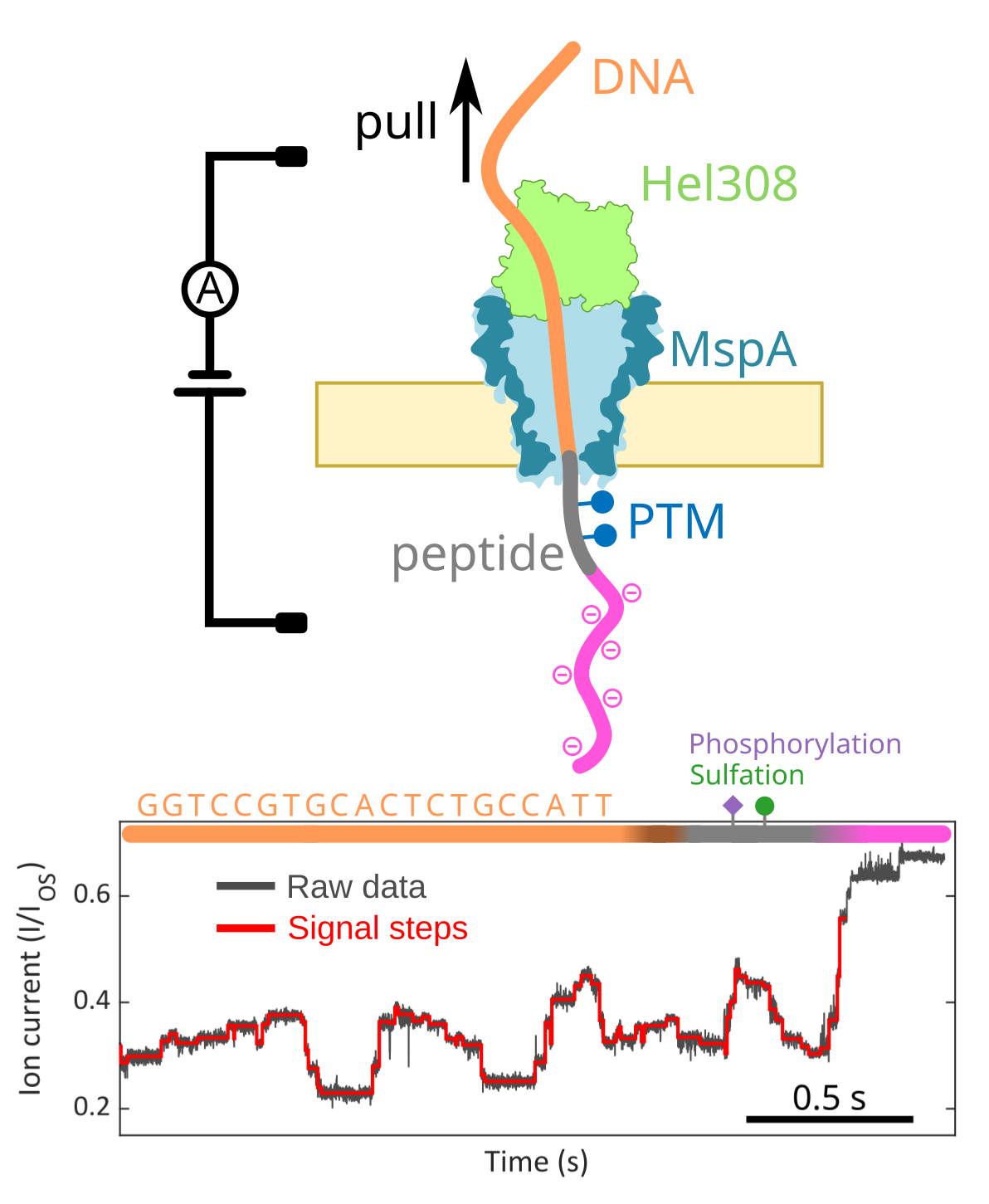
Figure 1: Detecting post-translational modifications on a single peptide with a nanopore. (Chen et al. 2024, ACS Nano)