Peroxisomes
Peroxisomes are small membrane-bound organelles that are essential for cellular metabolism. They are involved in fatty-acid oxidation, reactive oxygen detoxification, and lipid biosynthesis. Their dysfunction is linked to severe disorders such as Zellweger spectrum disorder, underscoring the importance of understanding how these organelles work at a molecular level.
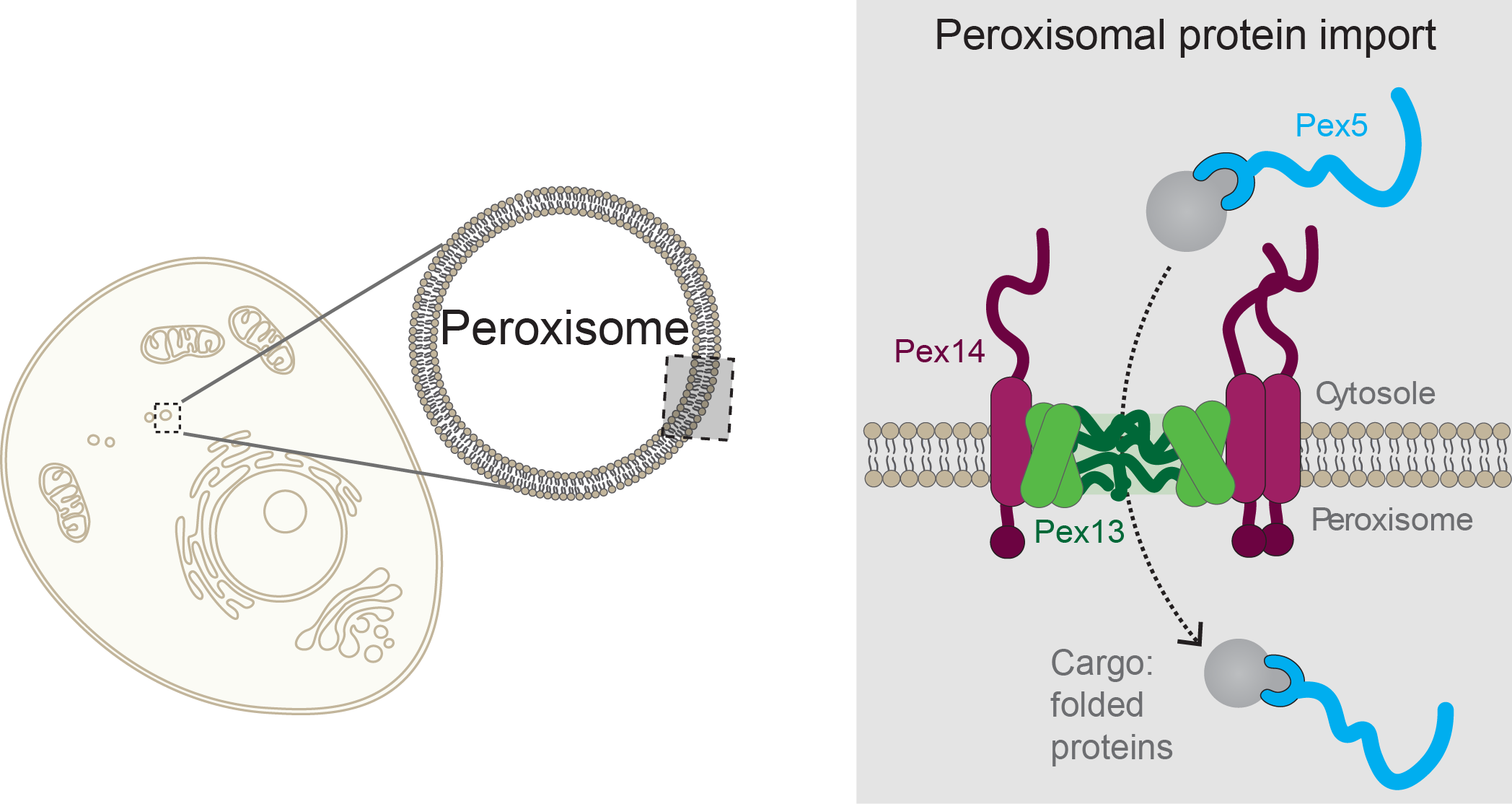
Unlike most membrane translocases that require proteins to unfold before transport, the peroxisomal import machinery can translocate fully folded proteins across the membrane. This process is mediated by a specialized import system containing intrinsically disordered regions enriched in tyrosine–glycine (YG) repeats, which are proposed to contribute to a selective transport environment. This concept resembles the nuclear pore complex, where phenylalanine–glycine (FG) repeats in FG-nucleoporins form a dynamic barrier that regulates macromolecular transport through transient interactions with transport receptors.
We aim to test this analogy directly and uncover the physical principles governing selective transport through the peroxisomal membrane using our lab’s biophysical toolkit that we also applied to nuclear pore complexes: reconstitution in controlled model systems, DNA origami scaffolds, single-molecule measurements, and quantitative nanobiophysics. By doing so, we will resolve how disordered proteins organize into a functional transport conduit and how this conduit enables selective passage at the molecular scale.